
Macroeconomic management is usually a lot more comfortable with lower fiscal deficits. The sooner we get there, the better for the economy, says former Chief Economic Adviser to the Government of India Shankar Acharya.
India's economy continues to be robust, but downside risks such as rising crude oil prices, adverse weather conditions, and the global banking crisis outweigh the upside potential in gross domestic product (GDP) growth in the current financial year (FY24), the finance ministry said on Tuesday in its Monthly Economic Review for March. "We reiterate that downside risks to our official forecast of 6.5 per cent for real GDP growth in FY24 dominate upside risks," the review said. "Opec's surprise production cut has seen oil prices rise in April, off their lows of low-seventies per barrel in March.
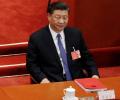
Observers say China should re-address its policies towards India or else it will continue to face flare-ups increasing the tensions between the two countries at a time China's increasing tension with the US over Taiwan and the South China Sea besides the downturn in the Chinese economy which is hit hard by the zero-covid policy.

Claims of a spike in poverty and inequality in India during the Covid-19 pandemic are patently false as such claims are based on uncomparable different surveys, according to a paper co-authored by eminent economist Arvind Panagariya. The paper also noted that inequality fell in the country during Covid years, both in rural and urban areas as well as nationally. Panagariya, Columbia University Professor and former vice chairman of NITI Aayog and Vishal More of Intelink Advisors, New Delhi have co-authored a detailed paper 'Poverty and Inequality in India: Before and After Covid-19'.

India will need to travel back in time and seek inspiration from football greats Tulsidas Balaram and Chuni Goswami to deftly dribble around and sidestep the West-imposed price cap on exports of Russian seaborne crude oil. India depends on imported oil to meet 86 per cent of its needs, of which nearly a quarter now comes from Russia. The copious flows are roughly 10 per cent cheaper than competing suppliers helping India save billions of dollars in fuel costs.

American brokerage firm Morgan Stanley on Thursday sharply cut its India FY23 real GDP growth estimate to 7.9 per cent, mainly due to the impact of the Russia-Ukraine conflict on oil prices. Analysts at the brokerage also raised their inflation forecast to 6 per cent - the upper end of the tolerance band for the RBI - and flagged stagflation risks because of the ongoing events. "We believe that the ongoing geopolitical tensions exacerbate external risks and impart a stagflationary impulse to the economy," they said. It can be noted that stagflation involves a stagnancy in output or growth, coupled with high inflation.

A combination of one of the lowest labour costs and a large surplus workforce, which will continue to grow until 2031, is one of the key competitive edges that India is leveraging to challenge its rivals in Southeast Asia in the race for a China-Plus-One strategy. Apart from India, the countries in the race to woo global companies that manufacture in China, as well as the supply chains to their country include Thailand, Indonesia, Malaysia, the Philippines, and Vietnam. On the labour front, India is a clear winner.

The S&P BSE Auto Index has been one of the biggest outperformers among sectoral indices over the past year with returns of 26 per cent. By comparison, the benchmarks - the National Stock Exchange Nifty50 and the S&P BSE Sensex - managed about 6-8 per cent during this period. Improving demand, falling raw material costs, and rising product realisations, led by the premiumisation of portfolios, have led to a revision of growth estimates and upgrades by domestic brokerages.

The India government needs to work on policies that can enhance global trade.

Mutual funds, as experts and custodians of another set of retail investors' savings, play a speculative game they are neither supposed to nor equipped to do, cautions Debashis Basu.

Lead indicators suggest that domestic current account deficit (CAD) is likely to reduce in 2023, while macro-economic stability has received a boost from inflation being brought back to the official tolerance band, according to the Reserve Bank of India's (RBI's) January 2023 Bulletin. "With the merchandise trade deficit reaching an all-time high of $83.5 billion in a quarter, and a rise in net outgo from the income account, the current account deficit increased to 4.4 per cent of GDP in Q2FY23," the State of the Economy article in the bulletin said. "It is noteworthy, however, that the CAD for Q1 was revised down from 2.8 per cent to 2.2 per cent on account of downward adjustment in Customs data.

'The Fed rate will peak in the range of 5.1-5.3 per cent during the second quarter of CY23 and will most likely stay there for a while before rate cuts start in CY24.'

El-Sisi welcomed Modi, who is on a two-day state visit to Egypt, at the Presidential Palace where the two leaders were closeted for one-on-one meeting after which the two sides signed a memorandum of understandng.

The domestic hospitality industry is looking to 'fly' in 2023 cashing in on India's G20 presidency, having received the 'oxygen' to run in 2022 after being crippled in the past two years by the pandemic. Domestic travel, especially the leisure segment, gave wind to the industry this year and is expected to continue into the next. Industry players believe that as international arrivals are also likely to pick up even further, the outlook for 2023 is buoyant.

'Young working adults between 25 and 34, who are in Indian Tier II and III cities, are leading the charge in terms of crypto adoption.'

India's GDP is estimated to contract by a record 7.7 per cent during 2020-21 as the COVID-19 pandemic severely hit the key manufacturing and services segments, as per government projections released on Thursday. Amid overall decline in economic activities, some respite was provided by the agriculture sector and utility services like power and gas supply, which have been projected to post positive growth during the current fiscal ending March 2021.

The Parliamentary Standing Committee on Commerce has observed that a massive shortfall in the budgetary allocation of over Rs 1,900 crore by the finance ministry to the industry department may have an adverse impact on the implementation of infrastructure (infra) projects in 2022-23 (FY23). While the Department for Promotion of Industry and Internal Trade (DPIIT) had sought Rs 10,267 crore from the finance ministry for FY23, it received Rs 8,348-crore allocation. For the National Industrial Corridor Development & Implementation Trust (NICDIT), the finance ministry has allocated Rs 1,500 crore instead of Rs 2,400 crore demanded for the project.

7 key areas that the Budget must address to re-energise the infrastructure sector, suggests Vinayak Chatterjee.
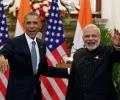
'At a time when the entire India-US relationship needs to be defined by President Trump and Prime Minister Modi, a fresh look at the liability issue has become urgent,' says Ambassador T P Sreenivasan, former Governor for India at the IAEA.

'At the heart of the strategic relationship between our countries are economic ties.'

India's rupee is likely to remain under pressure due to high prices of crude oil and other commodities, and may stabilise at around 79-80 against the US dollar in the near term, say experts amid limited headroom available with the Reserve Bank to check the weakening of the domestic currency. The currency has slumped over 5 per cent this year after Russia's invasion of Ukraine sent international crude oil prices soaring to a decade high. On Monday, rupee ended at a fresh all-time low of 78.34 (provisional) against the US dollar.

The 15-member body called for enhanced actions, from closing financial system loopholes to stopping the abuse of charitable causes, as well as updating the existing IS and Al Qaeda sanctions list.

The Securities and Exchange Board of India's (Sebi's) technical advisory committee has been mandated to probe the trading halt at National Stock Exchange (NSE) and fix accountability. The committee after a detailed examination would send its findings and recommendations to whole-time member Madbhi Puri Buch, to decide the future course of action, said two people in the know. The panel, which is currently chaired by Ashok Jhunjhunwala of IIT Madras, is learnt to have sought an explanation over two key issues from NSE: One on the effectiveness of interoperability as it was unable to migrate the trading positions; the other on laxity in switching it to the disaster recovery site.

If they can sit together and hammer out 'Black Sea Initiative' deal for much needed food shipments, surely, they should be able to address the madness of the larger military conflict?

Budget has already bombed at the box office and passing it without a revisit will be a mockery of the exercise though any modification may be short lived and perfunctory, observes V Ranganathan.

While no specific state-oriented sops were rolled out, a strong thread of political wellness ran through the Budget.

After contracting for two quarters in a row, the Indian economy entered the positive territory with a growth of 0.4 per cent in the October-December quarter, mainly due to good performance by farm, services and construction sectors, official data showed on Friday. Trade and hotel industry registered a contraction of 7.7 per cent during the third quarter this fiscal, as the sectors continued to suffer on account of coronavirus pandemic. According to the data released by the National Statistical Office (NSO), the farm sector recorded a growth of 3.9 per cent, and the manufacturing sector output grew by 1.6 per cent in the quarter under review.

The credit guarantee cover under the scheme would be both transaction-based (for single eligible borrowers) and umbrella-based (for a group of eligible borrowers).

India is back on the diplomatic table pushing oil producing countries to raise production in a bid to cool down runaway oil prices. Brent crude oil prices traded above $90 a barrel, on Thursday, for the first time since 2014. Brent is the most popular marker for crude oil trade. It is used as a benchmark for two-thirds of the world's internationally traded crude oil.

The substantially increased economic dualism may exert lasting negative influences which could include a reduced potential for economic growth; the persistence of a very weak employment and poverty situation; rising social and political discord; and heightened vulnerability to geopolitical challenges, cautions Shankar Acharya, former chief economic adviser to the Government of India.

A petition has been filed in the Supreme Court, seeking an independent probe by a special investigation team (SIT) into a recent hooch tragedy in Bihar, in which at least 30 people have lost their lives.
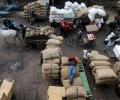
India's economy grew by 1.6 per cent in the fourth quarter of 2020-21, restricting the full-year contraction to 7.3 per cent, official data showed on Monday. The fourth quarter growth was better than the 0.5 per cent expansion in the previous October-December quarter of 2020-21. The gross domestic product (GDP) had expanded by 3 per cent in the corresponding January-March period of 2019-20, according to data released by the National Statistical Office (NSO).

If you have seen Zwigato, Param Kumar's story will sound familiar. Laid off from his job as a repairman at a Gurugram-based water purifier provider, he now delivers groceries and food for a mobile-based delivery app, in Delhi. Kumar, who started making deliveries last August, told Business Standard that he is working longer hours than his older salaried job as an RO repairman, and has no paid leaves or health insurance. Kumar is part of India's estimated 7.7 million-strong force of gig workers.
India's economic growth surged to 20.1 per cent in the April-June quarter of this fiscal, helped by a low base of the year-ago period, despite a devastating second wave of COVID-19. The gross domestic product (GDP) had contracted by 24.4 per cent in the corresponding April-June quarter of 2020-21, according to data released by the National Statistical Office (NSO) on Tuesday. The government had imposed a nationwide lockdown at the onset of the COVID-19 pandemic last year.

'Sullivan and Jaishankar welcomed the cooperation in recent weeks that resulted in deliveries of over USD 500 million in COVID-19 relief supplies from the US federal and state governments, US companies and private citizens across America for the people of India'

India attracted an estimated $49 billion FDI in 2019, a 16 per cent increase from the $42 billion recorded in 2018.

The country's gross domestic product (GDP) is likely to grow more than 9.5 per cent in fiscal 2021-22, an SBI research report-Ecowrap said. The economy grew at 8.4 per cent in the second quarter of the current fiscal, according to data released by the National Statistical Office (NSO) on Tuesday. The growth in the April-June quarter of this fiscal stood at 20.1 per cent. In October's monetary policy review, the Reserve Bank of India had retained its projection for real GDP growth at 9.5 per cent in 2021-22, consisting of 7.9 per cent in Q2; 6.8 per cent in Q3; and 6.1 per cent in Q4 of 2021-22.

India on Monday set aside over Rs 7,100 crore in its budget for 2021-22 as development assistance for countries in its neighbourhood as well as in Africa and Latin America, with Bhutan getting the maximum allocation of Rs 3,004 crore while Rs 100 crore will be given to Chabahar port project in Iran.

The estimated size of the Durga Puja economy could be about Rs 2.75 trillion in 2021 had there been no pandemic, points out Atanu Biswas.

Maharashtra's "radical" lockdown move will have an economic impact of Rs 40,000 crore, with the trade, hotels and transport sector to bear the biggest dent, Care Ratings said on Monday. The rating agency said the loss of economic activity will have a 0.32 per cent impact on the gross value added (GVA) growth at the national level. It revised down its national GDP growth estimate to 10.7 - 10.9 per cent from the 11 - 11.2 per cent given a week ago. Maharashtra has been contributing nearly 60 per cent to the daily COVID-19 infections nationally and had over 57,000 new cases on Sunday.
